 |
| 10. Super Mario Party |
Having gained a working knowledge of most of the Mario Party games, either through personal experience or watching Let’s Plays, I can see why they decided to ditch the numbering system for this one - partly because Mario Party 11 isn’t quite as eye-catching a title as Super Mario Party, but also I think because the move to the Switch has given Nintendo a genuine opportunity to refresh the series. Physically the Switch controllers are lighter and more forgiving than those on the Wii, and it’s impossible to deny that its graphical capabilities are beautiful. While there’s very little story in a Mario Party game, a bit of a change-up has happened plot-wise too, in that Super Mario Party gives a vague reason for everyone to be in a competition. For those familiar with older games in the series, though, the biggest story change is the introduction of more traditionally villainous characters to the roster: alongside mainstays Wario and Waluigi you can now play as Bowser, Boo, Shy Guy, Monty Mole, and a handful of others who are usually in opposition to Mario and co. This doesn’t actually impact on gameplay (it isn’t Good Guys vs. Bad Guys unless you choose to make it so in the 2v2 “Partner Party” mode), but obviously good news for fans of those characters, or just anyone who’s played out on the usual choice of protagonists the series offers.
Like older iterations on the concept, there is no reliable way to win Super Mario Party: there’s a level of skill and strategy involved, but the game lives for the chance to throw random elements at you, ranging from little last-minute boosts to the player in last place, to the “Bonus Stars” given out at the end that can quite easily upset the whole rankings as they stand. This makes sense: it’s designed as a family game, and this mechanic prevents the more experienced players from absolutely flattening any tiny kids with poor coordination, older people with slower reflexes, and/or non-gamers in the group. It’s a highly accessible game and a great way of spending an hour or two in the company of your favourite people - even though, it bears repeating, you will all hate each other just a little bit by the end.
 |
| 9. Guts and Glory |
How offensive you find this game will depend in large part on which version you play - the console ports are just a little bit tamer than what you get on PC, as detailed below - and which vehicle-character combos you choose to play as. Your feelings on non-malicious but nevertheless quite explicit cartoon violence, especially if child characters are involved, will likely also be a factor: even though the ports to PS4, XB1, and Switch replace three of the youngest-looking sprites with adults, there are still, at the very least, a couple of tweenagers among the line-up no matter which version you play, who will be getting gibbed along with the grown-ups.
Luckily, my sense of humour can get dark as fuck, and after platinuming Sherlock Holmes: The Devil’s Daughter you’d better believe I’m forever ready to show annoying kid characters in video games what I think of them. (I mostly jest but, seriously, I would have happily let Katelyn die at the end given the option.) I describe the violence in Guts and Glory as non-malicious because it’s never NPCs who are out to get your character; other characters are limited to standing on the sidelines looking bemused and, occasionally, getting absolutely destroyed by the playable vehicles. No, this is a racing game, and the hazards are all of the environmental variety; though in this case the environment includes not just steep drops and hairpin turns, but also landmines, giant rotating saw blades, automated crossbow turrets and cannons, swinging death logs, and just super heavily medicine balls coming at you out of nowhere.
It’s a rare game that allows you to lose at the same level multiple times in a row without it becoming frustrating, but Guts and Glory manages to make failure more entertaining than success. Then, once you do succeed, there’s a nice message of congratulations and a satisfying leaderboard pop-up, upon which you’ll probably discover with amazement that your glorious run only got you up into the mid-tens-of-thousands. Evidently there are some Guts and Glory pros out there already, and the game was only released last summer. The PC version also comes with a level editor and a large (and rapidly growing) catalogue of fan-made levels courtesy of its active community, though these features are sadly missing from the console ports, along with the ability to strap little Jimmy into his child seat for a relaxing Sunday morning bike ride through a brutal death gauntlet.
Due to the aforementioned limitations of the console ports, this one is best enjoyed playing on PC with a controller (as the mouse and keyboard controls can get a little fiddly). However, if you are a completionist it’s worth noting that the console versions do come with some exclusive characters who are hilarious in their own right. The fact that I’m pretty OK with investing in two copies so I can collect ’em all probably says more about my twisted enjoyment of this sick, silly game than anything else I could write.
 |
| 8. Prey: Mooncrash |
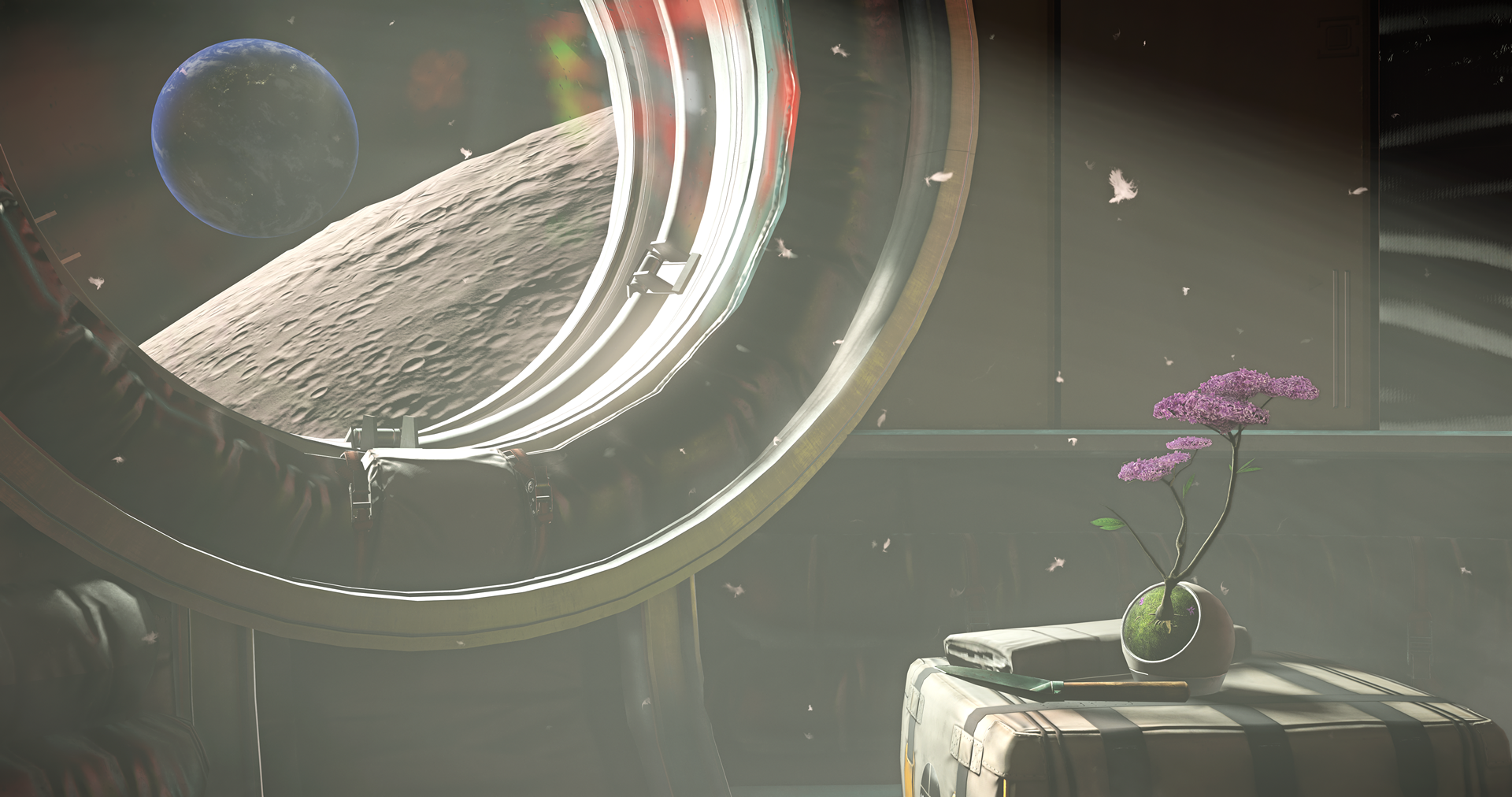
I decided to relax that rule for Prey: Mooncrash for three reasons. First of all, though it technically does require a copy of the Prey base game to run, both the length of this new campaign, and the completely new direction it takes by comparison to the main game, felt more like a stand-alone spin-off than an add-on. (Compare Dishonored: Death of the Outsider, also by Prey developers Arkane Studios: eventually released separately from the game it was originally planned as DLC for, it too was much more than just a few extra hours at the end of Dishonored 2.) Secondly, Prey: Mooncrash was genuinely one of the best games I played in 2018, and to not include it over a technicality felt wrong, just like including those other games on the basis of a technicality felt wrong. Third and finally, Prey is an excellent and still-evolving game from 2017 that sadly never really got the attention it deserved, despite great reviews; this DLC was the first of a number of efforts at remedying that, and once again Arkane have made a great game that, unfortunately, hardly anyone has played yet.
It helps to know what happened in Prey before you play Mooncrash, but I’d argue that you don’t strictly need to: the characters and setting are completely separate, and the stakes of the situation are made obvious enough as soon as you start to play. So, while it’s nice for people already invested in the lore to know (for example) that Riley is Morgan and Alex’s cousin, not knowing the significance of any of those names won’t particularly hamper your enjoyment of the story. But you need a copy of Prey to play Mooncrash, so you might as well start there - it’s an intricately constructed fictional world that’s worth the investment of your time, with Mooncrash as an additional pay-off that’s worth the wait.
Unlike many DLC episodes, Mooncrash is neither too short nor too derivative of the main game’s mechanics. Clocking in at around the 20-hour mark for completionist types, it’s got pretty good value for its £12-£15 price tag (or very good value for the £20-£30 you’ll pay if you buy it bundled with the base game - a significant discount if you catch them on sale together). The base game’s core mechanics are all present, with a few added features such as weapon durability thrown in, presumably on the back of the popularity of games like Fortnite (Prey even got its own battle royale mode, Typhon Hunter, later on in 2018). The package it’s wrapped in, though, is quite different. Without wishing to give any major spoilers for Prey, it’s safe to say that for the most part the main game is presented as an FPS with a story playing out in real-time. Mooncrash, on the other hand, is primarily framed as a digital reconstruction of catastrophic events that have already taken place, with the player character able to go back through the same hour or two repeatedly, witnessing different possibilities playing out through the eyes of five different avatars, all of whom died in the real world and left personal black-box recordings behind. You can - and will probably want - to Source Code them out of danger, but you’re forever aware that there’s nothing you can really do to help them, and that your real character has his own pressing reasons for wanting to get the job done. Additionally, every new loop comes with a resource cost, so both the character and the player have reasons to want to avoid failures and missteps wherever possible. You’re still engaged in a lot of the classic Prey gameplay - compulsively checking whether any and all inanimate objects you encounter might be alien mimics, dodging environmental hazards and trying to arm yourself against the looming Typhon threat with the biggest and best blasters you can find, all while piecing together your crewmates’ tragically detailed broken lives from the shards lying around everywhere. But the switched-up gameplay priorities force you to approach it in a different way, and everything seems brand new. And of course, it wouldn’t be Prey without an unnerving twist or two along the way...
 |
| 7. Detroit: Become Human |
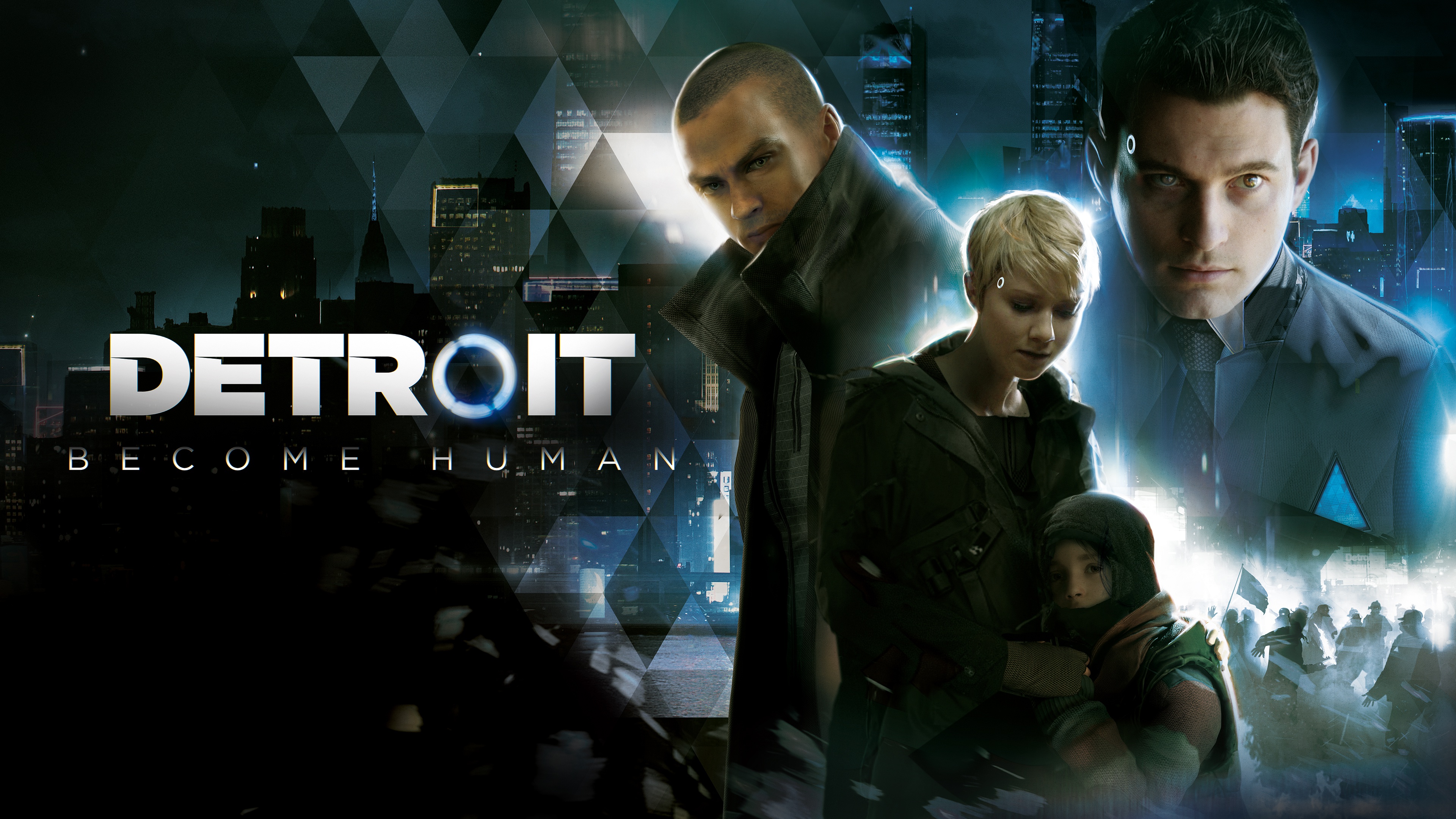
Unless you just really can’t stand anything written by David Cage, you’re probably of the opinion that Detroit: Become Human is the best game yet to come out of his studio Quantic Dream. Admittedly, the only real competition for that honour was 2010’s Heavy Rain (which, incidentally, I also played for the first time in 2018); which, despite being deservedly beloved, had a slew of issues, from its stilted acting to an admittedly nonsensical plot, in addition to just looking a bit dated at eight years old. Detroit: Become Human takes all of these criticisms on board (except, maybe, the accusations of sexism in Cage’s portrayal of women - though even that’s at least toned down significantly, thankfully) and demolishes them one by one.
By far and away the best thing about Detroit: Become Human are the performances put in by the cast. Bryan Dechart as Connor is deservedly being nominated for every video game acting award going, and I’m not just saying that because I’ve quite unashamedly adopted the character as my latest husbando. (If you think I ended Heavy Rain with a bit of an excessive crush on FBI Special Agent Norman Jayden, oh my, do I have news for you about how I feel about Connor). Aside from being deservedly lauded for portraying Connor’s (mostly wordless) internal struggle between obedience and deviance, Dechart’s comedic timing is something that I feel isn’t getting nearly the recognition it deserves. His politely smiling human-face equivalent of your computer’s “processing, please wait” pop-up every time Hank makes a sarcastic comment, or his brief pauses when reconciling illogical or contradictory instructions from his human colleagues, are Nimoy-esque in their understated humour in an inter-species comedy of manners. Other stand-out performances for me included Jesse Williams as Markus, Clancy Brown as Hank, and Gabrielle Hersh as Chloe, though in truth you’d be hard-pressed to find a bad actor even among the minor supporting cast. The contrast with Heavy Rain, where even the lead actors (bless their handsome FBI agent faces) couldn’t always maintain a believable accent, is pretty sharp.
If I have one complaint about Detroit: Become Human, it’s that there are so many minor choices in every scene that it becomes difficult to see your decisions as being meaningful overall. The level of nuance in some of the stories (for example, how far and under what circumstances you choose to have Connor deviate from his programming) sooner or later ends up being overruled by a stark binary choice so that the game can determine down which branch the plot needs to move. A similar objection was levelled against the end of the original Life is Strange, and while I feel Detroit: Become Human handles it better, it is still there.
Detroit: Become Human tackles a lot of fascinating questions about what it means to be human, both in relation to your essential sense of selfhood and in how you relate to those around you; and while it doesn’t handle its attempts to answer them perfectly, it does present a brilliant framework in which the player can explore their own feelings in more detail. If, like me, you’re a fan of TV shows like Westworld and Humans; games like SOMA; movies like Ex Machina; or the writing of authors such as Isaac Asimov and Brian Aldiss, you’ll find Detroit: Become Human a good-looking, polished, and worthy addition to the robot uprisings canon.
And now that we’ve got the serious analysis stuff out of the way, do you have a moment for me to tell you some more about how just utterly lovely Connor is…?

No comments:
Post a Comment