Wednesday, 13 March 2019

2018 BAFTA Games Wish List

Tomorrow, this year’s (well, last year’s, technically) BAFTA Games Awards nominees are going to be announced. Since I unfortunately didn't get the chance to play every single game that was released in 2018, I’m definitely not out to tell the nominations committee how to do their job, and I don’t feel like trying to second-guess their every decision with attempts at making accurate predictions. I do, however, have some pretty strong opinions about which games I’d like to see nominated in a lot of the categories, and some ideas about which of those preferences are broadly realistic. So what I’ve got here is not so much a set of predictions as a wish list: Dear BAFTA committee, I have been good all year, and here are some of the nominations I’d like to see…

(And not to play favourites among my favourites, but I’ve added a subtle hint as to which games I’m secretly backing.)
***


Best Game
I haven’t played it yet, but I’m 95% sure Red Dead Redemption 2 has got this one in the bag, and by all accounts it deserves it. To suggest that any of the (predominantly AA and indie) titles I loved last year might even get nominated, let alone win, seems pretty redundant by comparison. Going forward, I’ll just take it as read that RDR2 is going to be nominated in every category it’s eligible for; my only real request is that it isn’t given an auto-win in every category like it has been at some other award shows. However, there's just a slight chance this one might go to God of War if RDR2 ends up winning everything else, similar to how What Remains of Edith Finch pipped Hellblade to the title last year after the latter narrowly beat it in almost every individual category.


British Game
Full disclosure: there’s an element of loyalty at play here, as a friend’s husband works at Playground Games. But Forza Horizon 4 really does deserve this one; not just because it’s been made by a British studio, but because the game itself is all about pointing out everything that’s lovely about Britain. The beautiful environments showcase how easily the British countryside can compete with Australian beaches and Mediterranean coastlines as a stunning setting for a game, something that I don’t think had occurred to many people before, internationally or closer to home. If that’s not worth celebrating in this category, I don’t know what is.


Debut Game
I’m going to avoid mentioning these again because they’re way too obscure to actually catch the attention of the BAFTA nomination committee, but my two favourite games of last year were in fact both debuts for their respective studios: Monster Prom by Beautiful Glitch and The Council by Big Bad Wolf. Just putting it out there. Your move guys.


Evolving Game
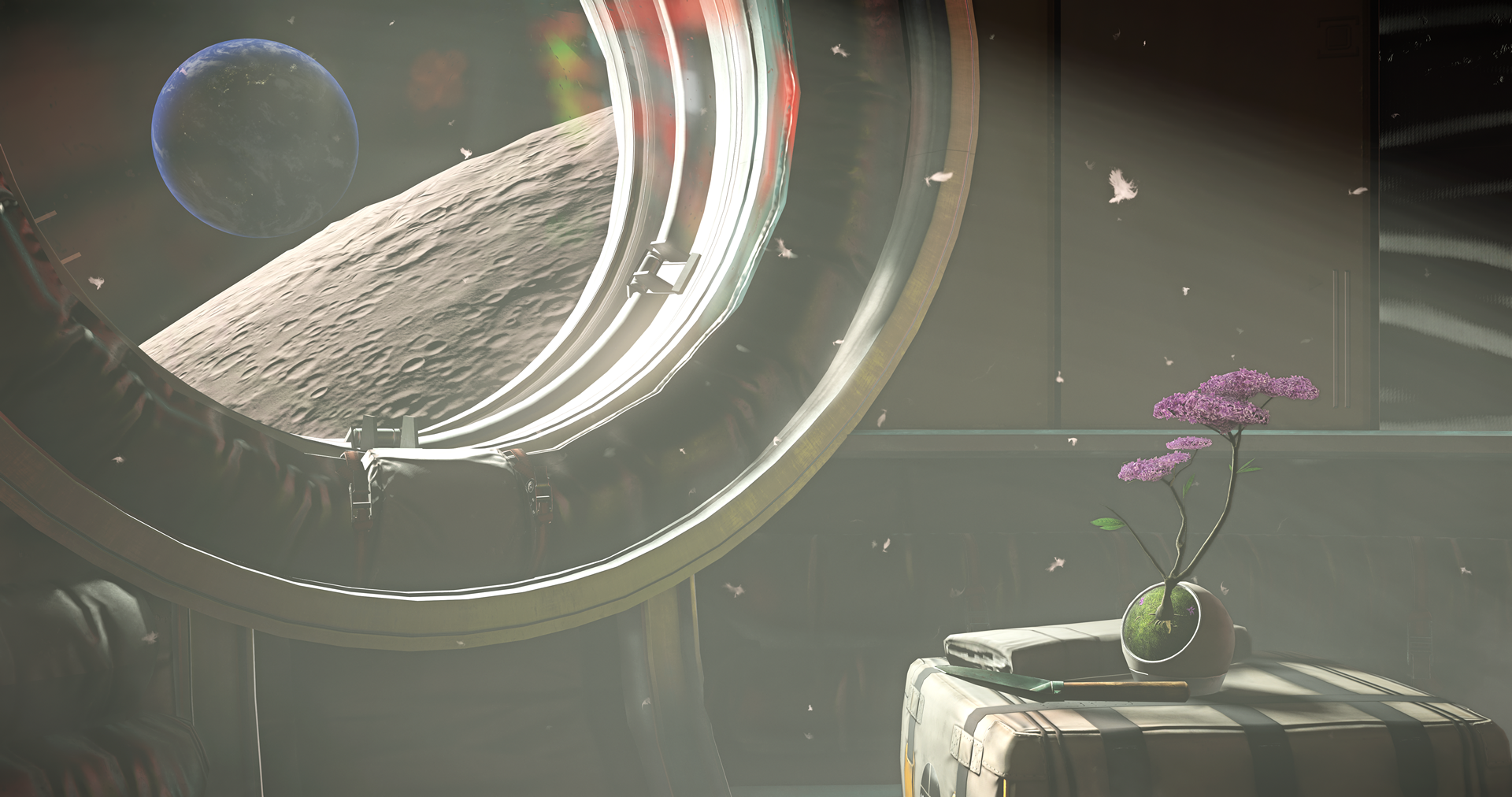
This category primarily belongs to the MMO genre, if the last few years’ nominees are anything to go by. However, the occasional single-player game with really good DLC does manage to sneak through, which is why I’d really love to see Prey come up in this category. After receiving a muted but largely positive critical response when it was released in 2017, Prey unfortunately never caught on much outside of its core fanbase. Arkane Studios spent 2018 doing a lot to combat that with many surprise add-ons, including: story DLC Mooncrash, that mixed things up with procedural generation; asymmetrical online multiplayer mode Typhon Hunter; New Game Plus; Survival mode, adding weapon durability and other modifiers; a VR escape-the-room puzzle mode; and a handful of customisation skins thrown in just for fun. Their mission was explicitly to see how far and in how many ways their game could be extended, and the sheer scope of what they came out with in such a short time, and to such a high quality, deserves recognition.


Game Beyond Entertainment
This category was introduced just last year, and might as well have been named "the Hellblade award for sensitive and realistic portrayal of mental illness". 2018’s line-up of new games has a less clear-cut choice, but there are definitely a few contenders. Detroit: Become Human certainly tackles some heavy social issues, though with David Cage’s notorious lack of grace (shall we say) in handling the difficulties faced by some of the marginalised groups he aimed to represent, it’s perhaps less than desirable to see this one go all the way. However, the 2017 nominees included Life is Strange: Before the Storm, so perhaps Life is Strange 2 might snag another nomination for the franchise? Or even - dare I say it? - The Awesome Adventures of Captain Spirit? I loved the latter, but am very aware that it was more meant as marketing material for LiS2 than a contender for any awards in its own right. But with its pitch-perfect approach to tackling the sensitive issues of grief, poverty, isolation, and abuse in the life and imagination of a child, surely it deserves a chance at this nomination.


Family
Super Mario Party. I mean, Nintendo in general and the Mario franchise in particular seems forever poised to absolutely slay it in this category, especially since the release of the Switch. And it’s really hard to argue against that, with its family friendly aesthetics and accessible controls. Add some good old-fashioned board game fun to that, with its built-in ability to cause some spectacular family feuds, and I can see this one going a long way. Well-received new entries in the Pokemon, Overcooked, and LEGO DC franchises might give it a run for its money, but personally I’d like to see a second consecutive victory for Mario & co., after Odyssey picked up this award last year.


Game Design
Separate from the Game Innovation category, I feel like Game Design is about making something that’s accessible and will be broadly familiar to most players, while avoiding the pitfalls of repetitiveness or coasting on past successes. I can think of a few games that did this well in 2018: Red Dead Redemption 2, of course; Assassin’s Creed: Odyssey quite probably deserves a mention; but I’d like to see some love for Sony’s PS4-exclusive Spider-Man game here. Gameplay wise it feels a lot like a good entry into the Assassin’s Creed franchise, modified with a Marvel skin: with its street crime side-missions, seemingly endless collectibles in unlikely places around an open-world city, and smooth flow of combat. All of these are very well implemented and good examples of their type, but any nominee in this category needs some unique mechanics too: Spider-Man brings that with the web-swinging ability, which is fantastically well-realised, with none of the frustrations and limitations of earlier attempts to bring Spidey’s signature skill to a video game. It’s a perfect blend of the comfortably familiar and just the right amount of cutting edge, and I hope to see it recognised for that.


Game Innovation
I cover A Way Out in a few entries on this list, and every time it comes up I find myself mentioning the idea of innovation. It really is a game that plays like no other: even though the individual elements are familiar, the unique combination of narrative-driven storytelling and co-operative multiplayer makes the game stand out. To say more would be to repeat myself to the point of tedium later on, but I really can’t think of a more original game-play style I encountered last year.


Multiplayer
Now, if you go by the nominees over the past few years, you’ll get the strong sense that the when the BAFTA nominations committee hear “multiplayer”, they think “MMO”, or at a stretch “party game”. However, A Way Out - a narrative-driven action-adventure game that breaks the mould by having no single-player option; but building a powerful and moving story around the relationship between two characters and, by extension, the two players controlling them - surely deserves a nomination for its innovative take on what “multiplayer” gaming means.


Music
As someone with limited musical skills, it’s not really fair to cast myself in the role of an expert for this one. But I know what I like, and it’s a musical score that’s attention-grabbing enough to penetrate even my tone-deaf brain. The OST for We Happy Few is certainly that: nerve-jangling and uncanny, it’s beautifully weird and sets the tone of the game perfectly. Compulsion Games clearly put a lot of thought and work into the soundtrack, with three different strands - a procedural gameplay score, cinematic musical compositions, and a ’60s tribute band formed specifically for the purpose - coming together to create the ideal atmospheric music for the story. And, with We Happy Few’s long production delays and subsequent lukewarm reception almost certainly taking it out of the running for most of the major awards, it would be good to at least see it nominated in one area it really excelled in.


Narrative
I play a lot of games with really intricate narrative design, so I have a few nominees I’d like to see in this category. Detroit: Become Human feels like it’s in with a real chance, though I’d also really like to see a nomination for A Way Out (a rare game that I think could just as easily be nominated in the narrative and/or multiplayer categories, surely an achievement in itself). If the criteria allow it, it would also be nice to see the now-defunct Telltale get a final nod or two to recognise the hard work of their much-abused staff: even though production at the studio had slowed down considerably towards the end, Batman: The Enemy Within and The Walking Dead: The Final Season got two episodes apiece in 2018, which might be enough to snag them a nomination at the very least. Along the same lines, Life is Strange 2 should almost certainly get a look-in, though with only one episode released by the end of 2018, its winning power might be limited.


Performer
I can almost guarantee I’ll reel off five of the six nominees for this one without needing to look, because the pool of favourites this year has been so consistent: Bryan Dechart for Detroit: Become Human; Christopher Judge for God of War; Melissanthi Mahut for Assassin’s Creed: Odyssey; Yuri Lowenthal for Spider-Man; and Roger Clark for Red Dead Redemption 2. All worthy performances, but I can’t deny I’ve got my favourite to win: there’s a lot of love out there for Bryan Dechart, not only because of his stellar performance as Connor but also because of his profile as a Twitch streamer and his interactions with fans. And I’d love to see him win, mainly because I really do believe his performance in Detroit: Become Human was the best I saw all last year; but also because I’ve got a feeling that this has (unjustly in this case) proved to be one of several default-win categories for RDR2 at some other awards shows, and I’d like to see that balanced out here.
***

In conclusion, it turns out I’d like A Way Out to win… if not everything, then at least a lot of the things. Funnily enough, it wasn’t my favourite game of last year (though it was up there in my top five), but when thinking about games doing something new in a very compelling way, it’s one I can’t help but keep returning to. Other than that, it’s a pretty balanced wish list, I think. Oh, but if Bryan Dechart gets ignored, we riot, yeah?

Wednesday, 6 March 2019

My Top 10 Games of 2018: An Obligatory Year in Review - Part 3

In the home stretch now - here are my Top 3 Games of 2018! Prepare your best clutching-pearls for one of the most controversial lists of the year as I completely ignore Red Dead Redemption 2, God of War, Spider-Man, and the latest entries in the Tomb Raider and Assassin's Creed franchises in favour of an indie darling, an obscure AA debut, and a free-to-play teaser demo for a much more famous title! So, now that I've well and truly spoiled the surprise, onto #3-#1.


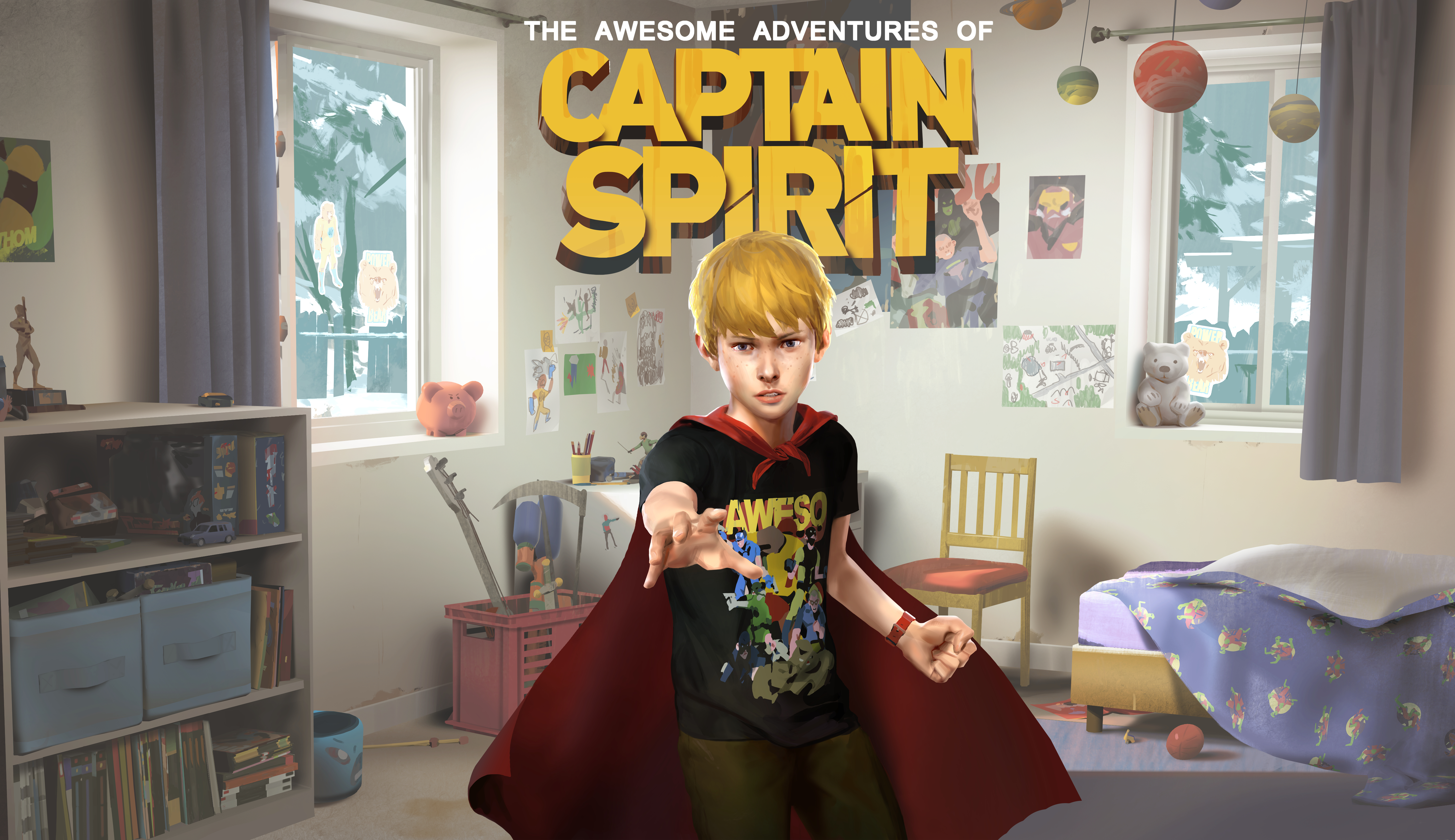
3. The Awesome Adventures of Captain Spirit
This one might be cheating a little bit because I actually got into Life is Strange for the first time in 2018, including playing the first game twice, and then sobbing my way through the prequel game Before the Storm like the disastrous Amberprice shipper I quickly turned into. So did The Awesome Adventures of Captain Spirit - technically the third game in the LiS franchise: a short, free prequel to the official sequel Life is Strange 2 - benefit from all that goodwill? OK, yes, unavoidably; but I also maintain that it really does stand up on its own as a brilliant game.

In response to a recent Twitter meme, I named The Awesome Adventures of Captain Spirit as the game I would recommend (and indeed have recommended) to a friend who wasn’t into video games but wanted to try one. There are a number of practical reasons for this: it’s a very short game (typically 2-3 hours), so a non-gamer who wasn’t enjoying the experience wouldn’t be stuck feeling obliged to plough through days and days of gameplay to please their gamer friends. It’s available on Xbox One, PS4, and PC, meaning that it’s about as accessible to all audiences as a graphically impressive modern game can get; and gameplay-wise it’s not challenging, so a novice would be unlikely to hit a frustrating learning curve. It’s also, I can’t stress this enough, available for free, seeing as it’s really a meant as marketing for Life is Strange 2. But it’s a game that stands up on its own, and since it introduces an all-new group of characters, someone who knew nothing about the rest of the franchise could enjoy it just as easily as an LiS super-fan.

For me, though, this game is made brilliant by the affection that I developed for the playable character, Chris. This was made all the more impressive by the fact that you only spend a very short amount of time inhabiting Chris’s world, and also that he’s a ten-year-old kid. Child characters in games often strike me as really, really annoying; so the fact that, by the end of the game, I would happily have fought a man, and then defended that action in court, to ensure Chris’s wellbeing, says a lot about how much I came to care about him. He’s just a great character: both in the sense that he’s pretty likeable and that he’s well-written, the latter of which is rarer - when adult writers are given the job of creating fictional children - than many of those writers seem to think.

The game takes place in a realistic, modern, American setting, but the events within are largely seen through the interpretation given to them by a troubled yet highly creative child. Nearly everything Chris encounters, however mundane - a broken water heater, a parked truck, a pile of junk in the front yard - is incorporated into his detailed imaginary world of superheroes and their villainous enemies. In Chris’s mind, a grand battle between good and evil takes place on an ordinary Saturday morning, while in the real world his difficult relationship with his widowed father plays out much more subtly. As the story unfolds, the player comes to realise the struggles many of Chris’s games represent, and it’s both heartbreaking and inspiring as his brave yet naive attempts to combat grief, poverty, and isolation become apparent. Like all Life is Strange games, it’s a shameless weepie, but I stand in awe of how artfully Dontnod wove Chris’s real and imaginary worlds together to create a simple, yet hugely impactful, narrative experience.


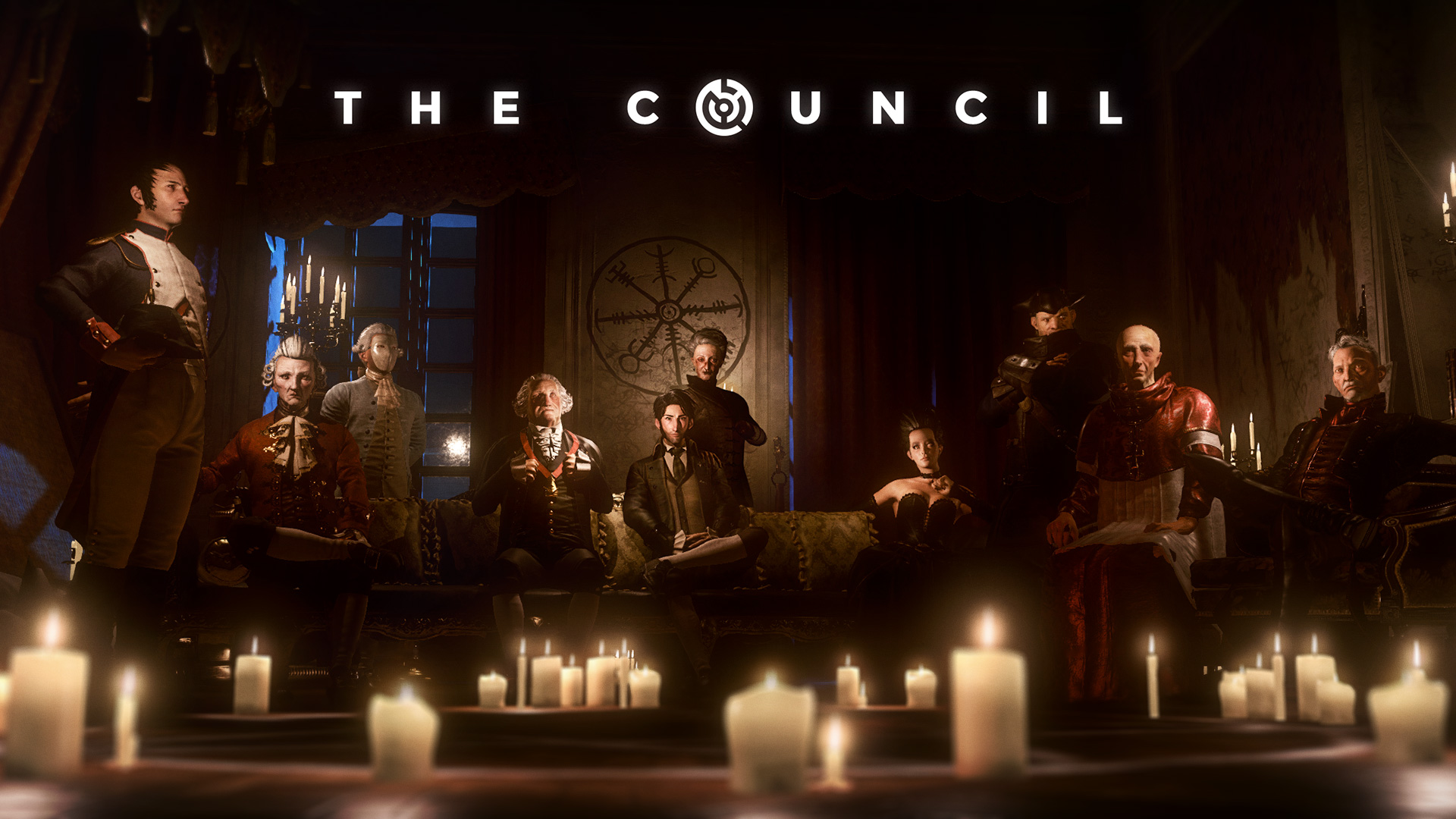
2. The Council
In the year that saw Telltale go out of business, in a shockingly sudden fall from grace for the seemingly untouchable titan of the interactive fiction genre, who would have thought that The Council would even make it all the way through its first season? Yet the first episodic game from Big Bad Wolf, self-declared specialists in narrative RPGs, not only made it to its season finale, but did so without ever slipping from its ten-weekly release schedule by more than a few days. (In fact, by my reckoning, the fifth and final episode landed a couple of weeks earlier than expected.) An impressive achievement when, at around the same time, the old hands at Dontnod were taking nearly four months to get the second episode of Life is Strange 2 ready for release.

In fairness to Dontnod, The Council was less populous and sprawling than their ambitious road-trip season: with the exception of the first episode’s prologue, the game takes place in a single location, with a fixed cast of characters clocking in at around the one-dozen mark. Full disclosure also compels me to add that the game did ship with some bugs which, while far from catastrophic, really ought to be ironed out in a post-full-release update; and that, depending on your choices, the final episode can run a little on the short side. But as a proving ground for Big Bad Wolf’s ability to craft a massive interactive story - one that encompasses a detailed alternate history for Europe and the Americas; plausibly interweaves real-world Christian mythology with the fictional eldritch religions of H.P. Lovecraft; and sets it all in an isolated country-house murder-mystery locale that Conan Doyle or Christie would have been proud of - The Council is a resounding success.

Very few modern games truly tax the player’s puzzle-solving abilities like the games of my childhood used to; and the ones that try often find themselves bogged down in the kind of impenetrable moon logic that many players believe ended the golden age of the adventure game genre in the first place. The Council’s puzzles may be its most outstanding feature: complex enough that, yes, you will likely need to resort to pen and paper if you want to be sure of solving them correctly, the answers are (with one minor exception) always ascertainable through the application of logic, deduction, and good old fashioned attention to detail.

The central story is a relatively straightforward one; but it takes place in such a complex global web of political intrigue (with a healthy dose of mysticism thrown in for good measure) that you will find yourself untangling its threads for days after finishing an episode. It’s a truly impressive feat of world-building to keep it all consistent, and the writers somehow not only pull it off, they make it look effortless.

The characters, by contrast, are cartoonish at times, both in their visual design and voice acting. But they are also refreshingly unstereotypical: from the buxom young English duchess, whose wealthy elderly husband turns out to have been sold into marriage to her; to the wizened, kindly old papal envoy, who simultaneously gives the impression that his loyalties lie with all God’s children and yet with nobody but his wealthy supporters; no-one is what they seem in The Council.

This game was so close to being my favourite of 2018, but it sits at the Number 2 spot for one reason: the ending. It arrives quite abruptly (at least from my perspective on my first play-through), and after the action every surviving character is given a brief epilogue… with the exception of the playable protagonist, whose fate is understandably the one everyone’s surely most interested in. Louis’s strange absence from the end of his own story is presumably intended to leave plenty of room for a second season, which was foreshadowed heavily in the final scene, and which I heartily hope the game gets. However, as we saw multiple times with Telltale, even the more popular episodic titles have often failed to attract interest for that elusive second outing; and I wouldn’t like that inconclusive non-send-off to be the final word in Louis’s story.


1. Monster Prom
Compared to many of the games on this list, Monster Prom is conspicuously low-budget: while its visual design is undeniably beautiful, you can’t deny that there is little-to-no character animation to speak of, and that the different environments are more implied in the mind of the player than presented on the screen. In short, it’s a visual novel: a sort of choose-your-own-adventure comic-book of the digital age. So what makes this tongue-in-cheek dating simulator my favourite game of 2018, beating out all those (at least moderately) flashy, action-packed RPGs that I was so excited about this time last year?

This is actually a really tough question to answer, because my initial urge is to just say that everything about this game is awesome, which is a passionate recommendation but perhaps not a very useful one.

OK, so to be sensible about it: firstly, the characters are all great. A game that’s entirely focused on building relationships between player and NPC can’t go anywhere without likeable characters, and Monster Prom doesn’t have a weak link anywhere in its roster. Each character combines a high school movie trope (jock, bad boy, princess, etc.) with a monster trope (werewolf, demon, literal mermaid princess…) to create a surprisingly deep backstory, all packaged in the form of an adorable and sexy humanoid abomination you’ll come to genuinely care about. The writing is intensely funny, bouncing from subtle satire to off-the-wall surrealism, depending on what the RNG throws at you and what you choose to make of the situations you find yourself in. There’s also lots of swearing, plenty of (off-screen) sex and violence, drug and alcohol use, and everything else the tabloids told your parents to worry about when you got interested in gaming. But it is genuinely all in good fun, with nothing dark or depressing (with the possible exception of some content added in the Halloween update) to sully your lighthearted pursuit of romance and/or sex with your monster of choice.

The gameplay is also surprisingly innovative: rather than just make another dating simulator, the makers of Monster Prom chose to shake things up and go the multiplayer route, with local co-op supporting up to four players. How much your friends’ shenanigans impact on your own romantic prospects and vice versa depends on your choices: you can be an upstanding wingman, sabotage a romantic rival, or just accidentally get underfoot from time to time. Thanks to the party-game nature of Monster Prom, each individual play-through is designed to last two hours at most, and the game’s replayability is a rightly celebrated feature, with dozens of potential routes through the game and thousands of branching dialogue strands.

Finally, it’s impossible for me to discuss Monster Prom without mentioning the creative team and community behind it. As an avid fan of gaming on YouTube it delights me that some of my favourite content creators - including Arin Hanson, Erika Ishii, Dodger, Cryaotic, and Jesse Cox (the latter of whom also came aboard as the game’s executive producer) - provide voices for the characters. But even though the voice talent attracted me initially, the continued involvement of the dev team at Beautiful Glitch in the game’s social media presence is hugely positive and highly visible. Actively welcoming fan fiction and fan art; engaging with players’ feedback to further develop the game, characters, and merchandise; and so far providing three sizeable free seasonal updates for summer, Halloween, and Christmas; Beautiful Glitch have done a brilliant job of fostering a thriving fan community centred around their wonderful, weird little indie dating sim. I don’t mind admitting it’s brought out the fangirl in me: I have framed Damien/Amira fan-art in my house now because I ship those two so much; while with creative uncertainty I’ve cobbled together my own (largely borrowed from Monster High, I make no apologies) monstersona to help me cope with my desire for a date with Miranda. And if any of that last sentence meant anything to you - congratulations! You’re probably obsessed with Monster Prom too! Let’s get together sometime and talk about how it was the best game of 2018!

Tuesday, 5 March 2019

My Top 10 Games of 2018: An Obligatory Year in Review - Part 2

The second part of my highly personal and apologetically biased round-up of last year's games. Pleasingly, #6-#4 were all on my "most anticipated" list at the beginning of 2018, which just goes to show that sometimes dreams really do come true, I guess...?


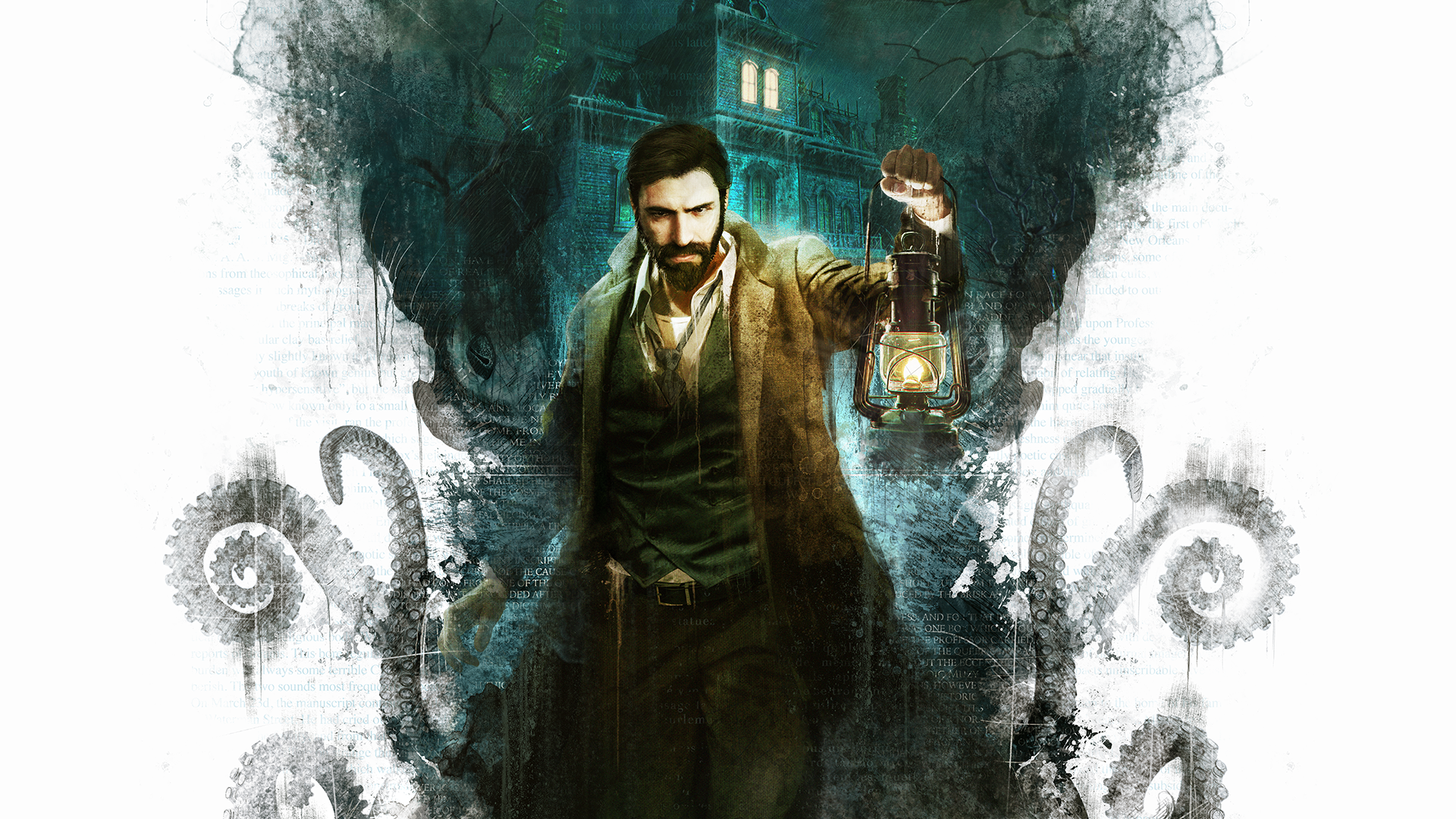
 6. Call of Cthulhu
Call of Cthulhu is a game I’d been hyped for since before I’d even heard of it - as a fan of Lovecraft’s Cthulhu mythos; as a fan of tabletop RPGs translated into video games; as a fan of Frogwares (the original developers); and yes, even as a fan of Cyanide, the developers who took over from Frogwares - I was ready for a game like this. It released at Halloween to mixed reviews, and in a way I can see why: it’s got an old-fashioned feel to it, being a linear story that strictly presents you with one quest objective at a time, and doesn’t let you so much as contemplate picking up a weapon at any point. Incidentally, Cyanide also had a hand in the production of The Council, very nearly my favourite game of 2018: another RPG-inspired dark mystery that required you to flex your brain more than your muscles to solve your problems. Clearly, I’m on board for this sort of thing.

I can admit that Call of Cthulhu isn’t perfect. For one thing, after playing the first third of the game, I encountered a bug in the Xbox One version that irreversibly erased my five or six hours’ worth of progress up to that point and catapulted me back to the prologue, which obviously didn’t fill me with joy. And, on a personal note, I wasn’t thrilled to learn that there are some sneak-past-the-guards forced stealth sections; I know some people are fine with them, but they absolutely rate as my most loathed video game mechanic, since for reasons unknown they set off my anxiety really badly. I’m not saying that the developers should have designed their game specifically with my mental health in mind; on the other hand, I don’t know anyone who particularly likes these sections, let alone loves them, so their increasing ubiquity in one of my favourite genres is something that’s starting to annoy me.

But, setting those couple of relatively minor exceptions aside, Call of Cthulhu is pretty much everything I’d hoped it would be. Even though Frogwares don’t officially get any credit for their work on the game, you can feel its shared DNA with The Adventures of Sherlock Holmes series and Dracula: Origin (to say nothing of Frogwares’ suspiciously Cthulhu-y upcoming title, The Sinking City). Both the gloomily green-tinged environments of the unsubtly named Darkwater Island and the slightly larger-than-life characters you encounter there could almost have stepped out of a direct sequel to Sherlock Holmes: The Awakened, my favourite game in the aforementioned series, which pitted Holmes and Watson against a group of Cthulhu cultists, and could very much be seen as the spiritual predecessor to this game. The protagonist, Edward Pierce, is also a private detective, albeit he’s no haughty Victorian gentleman; more the grizzled proto-hardboiled type, complete with obligatory substance abuse issues stemming from Bad Memories™ of the Great War™. The investigative sections of the game - which include mechanics allowing for deployment of my beloved social stealth abilities, as well as the possibility of utterly and hilariously failing stat checks at same - are really the highlight of the piece. So much of what happens at the Hawkins Mansion in particular builds up a wonderfully eerie sense of tension: as your character methodically examines the crime scene, you, as the player, become increasingly aware that the ruined old house may not be as abandoned as it seems. For me, there’s so much enjoyable tension in those sections where you’re 90% sure that everything’s probably going to be fine in the short-term - creepy, but fine - but you can’t let go of that 10% chance that the game is about to throw something really freaky at you. This is the sort of thing I come to horror games for.


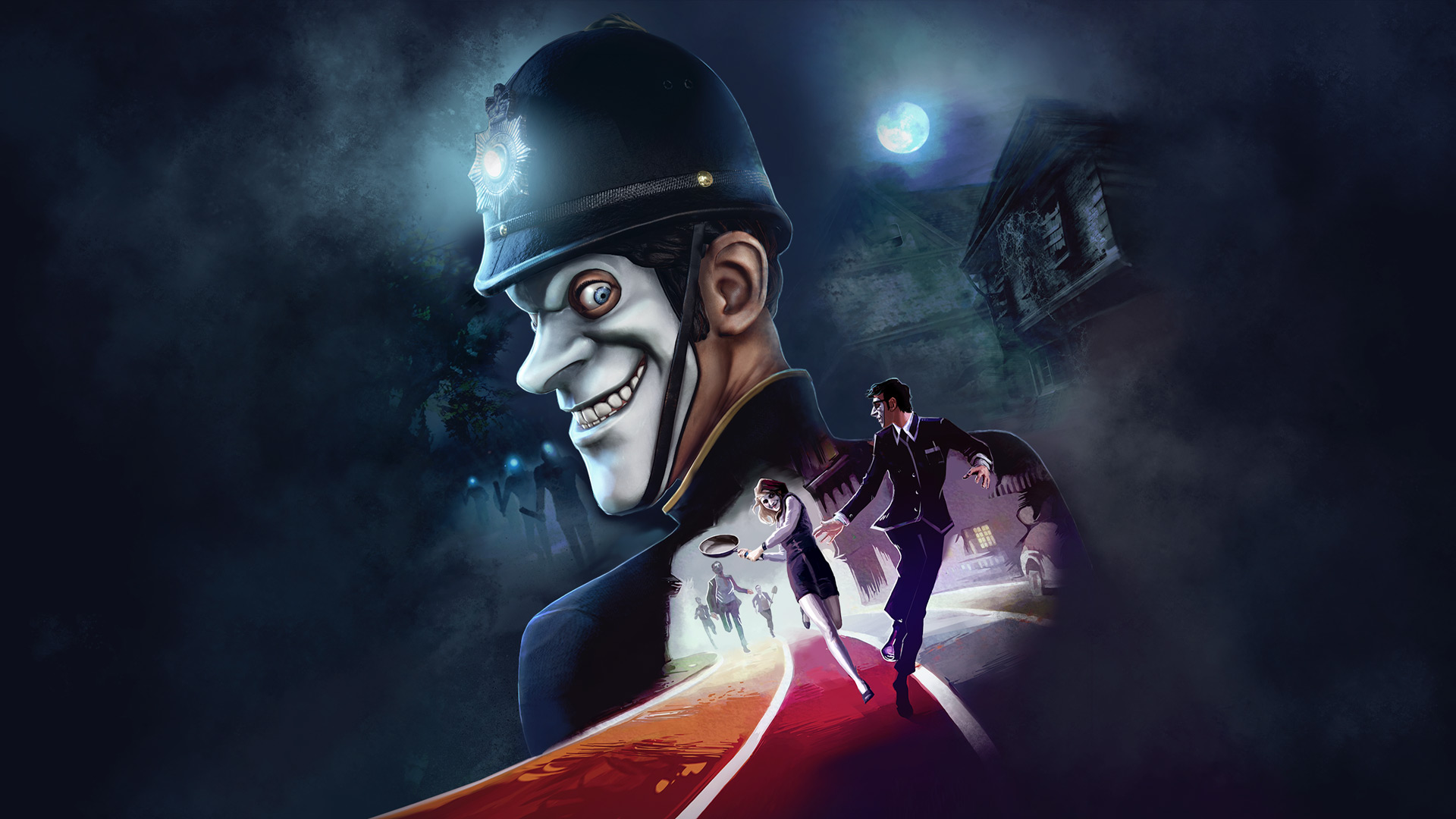
5. We Happy Few
“It’s not a lovely day for it! It’s a FUCKING TERRIBLE day for it!” - tertiary protagonist Ollie there, speaking on behalf of Britain in the year 2018.

The first time I saw a trailer for We Happy Few I thought it could have been made with me as its target audience. Sinister dystopian setting, inspired by Orwell, Huxley, and Burgess? Check. Protagonist trio comprised of a likable cowardly lion, a level-headed female scientist, and a comedically blunt Glaswegian freedom-fighter? Check. Nerve-jangling original score? Check. Doctor Who easter eggs? Check! Early hype compared it to that evergreen favourite BioShock, and while that turned out to be more of an aesthetic similarity - both are inspired by 1960s retro-futurism, but We Happy Few is a roguelike survival game, as opposed to BioShock’s linear FPS with sci-fi/horror elements - by then I was invested in We Happy Few for its own sake.

Unfortunately the production of We Happy Few was a touch rocky, and it spent over two years in early access before it was finally released in August - by which point, many of the people who were really interested to begin with had played it in its one-third or two-thirds finished state, and moved on. I can’t blame them for this - if anything, it’s a failing of the concept behind early access programmes, which is one of the reasons I almost never touch something before it’s got a full release. It’s a shame that the game’s reception ended up underwhelming, though, because all the things I was excited for in the early concept ended up paying off in the full release; and, even though roguelike survival games aren’t always my go-to genre, I’m enjoying how the mechanics have been implemented in We Happy Few.

As I’d hoped, the environmental storytelling is on-point, which is always something I look for in a game that’s not primarily narrative-focused. In addition to pursuing my characters’ objectives I’m currently (it’s one of the bigger games I tackled in 2018, so I haven’t managed to finish it yet) trying to unravel a number of mysteries that are playing out through diary entries and contextual clues, perhaps the most chilling of which is trying to find out what, exactly, has happened to all the children of Wellington Wells, the idyllic-seeming English village of the game’s setting. Toys and baby furniture litter the world, faded and worn from exposure to the elements but new enough not to have rotted away entirely; yet no-one can remember ever meeting a child, and there have been a few hints that after the bombs dropped all the children were sent… away… somewhere. It’s spooky stuff, enough that I’m now honestly more afraid of seeing or hearing… something… when scavenging in abandoned houses than I am of coming under hostile attack. So yes, in spite of some worryingly action-heavy evidence to the contrary, it is that sort of game after all. Yippee.

Another one of my favourite things so far is the social stealth. Since forced physical stealth may be my all-time least favourite game mechanic, I appreciate options in this regard: the game permitting me to use a weapon is always nice (We Happy Few features an array of improvised ones); but I’m a lover not a fighter, so I’ll always take the opportunity to try to talk my way out of a situation if it’s presented. In We Happy Few, there are a number of ways you can pass undetected among enemy characters. Wellington Wells is divided into a number of districts with their own dress codes (translation: how shabby or smart your scavenged post-nuclear-war outfit needs to be to fit in with your immediate neighbours) and behavioural expectations (translation: how stoned off your tits on “joy” - the mood-enhancing, perception-filtering, population-controlling drug - you’ll need to be in order not to be outed as sober and therefore a hostile “downer”). You can go full-on confrontational if you want, I suppose - I’ve not tried it, something tells me it’s a bad idea to piss everyone off when you’re easily outnumbered by crazed nationalist fanatics on psychedelic drugs - but if you want to achieve your goal of escaping the village, you might want to try to play nice. It’s much harder to craft that all-important widget with four angry policemen kicking you in the head, after all. Fortunately in this regard, the “Wellies” are not usually too bright, and I’m equal parts proud and ashamed to admit that I’ve got a decent track record of nicking their precious resources when their backs are turned, which they never seem to twig is happening as long as they don’t actually catch you in the act. Add to this the need to eat, drink, sleep, and tend to your medical needs, and you’ve got something not entirely dissimilar to a crossover between The Sims and (classic 1960s sci-fi TV series) The Prisoner, with a touch of Fallout sprinkled in for good measure. Your enjoyment of this game may well depend on whether or not that sounds awesome to you: to me it sounds pretty damn cool, if perhaps a touch niche; and that’s certainly been my reaction to the game so far.


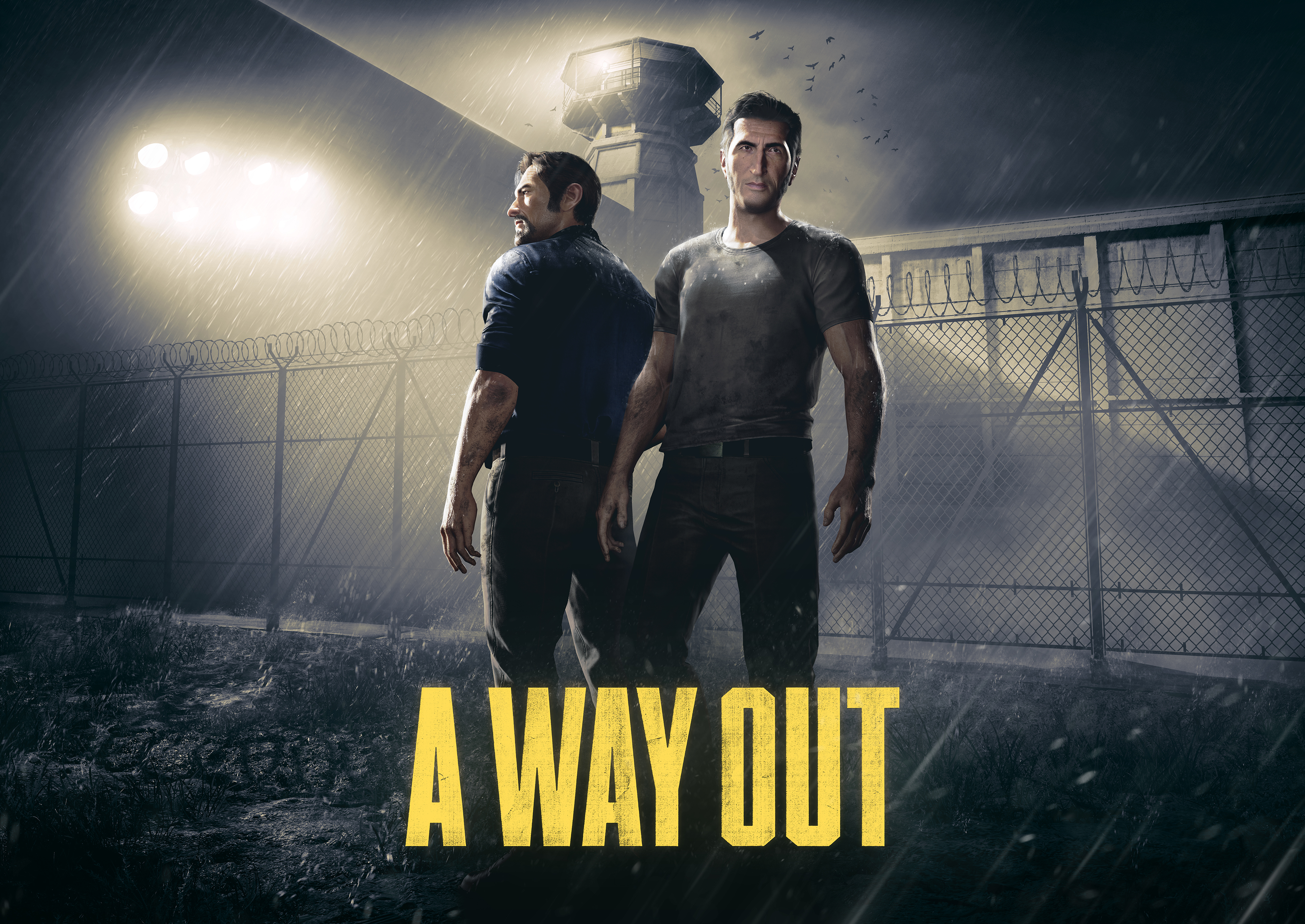
4. A Way Out
My last year in gaming may have been dominated by my introduction to the notoriously heart-wrenching Life is Strange franchise, but that didn’t mean there wasn’t time for another game to give me all the feels. A Way Out tackles both narrative-driven storytelling and co-operative gameplay in a whole new way, by the simple yet fairly unprecedented strategy of bringing the two together.

To play A Way Out, you’ll need a friend by your side - ideally in the room with you, though online co-op is a viable option if you need it, with the added sweetener that you’ll only need to own one copy of the game between you. I usually prefer to avoid spending my hard-earned down-time on games that don’t have a single player campaign, but A Way Out is about as far from an MMO battlefield as it’s possible to get: the two players guide their fully realised characters through a tightly written story (along the lines of Telltale’s The Walking Dead or similar), encountering puzzles that need to be solved with teamwork and decisions that need to be reached by compromise and consensus.

Visually, A Way Out is beautiful. Set somewhere in the middle of the United States in the year 1972, the whole game looks like a sepia-tinged photograph from that era, the palette saturated with autumnal colours that reinforce the story’s occasional sense of melancholy, and theme of things forever coming to an end. The players’ characters - Vincent, a white-collar money launderer, and Leo, a blue-collar bruiser from a crime syndicate - meet in the prison where they are both incarcerated and form a brief, odd friendship, bonding over their shared desire to escape their sentences and enact revenge on the mob boss who betrayed them both. As they bicker and barter their way through a plot heavily inspired by classic prison break movies - most notably Shawshank Redemption - you and your co-op partner will likely do the same; and as Vincent and Leo grow to trust each other more and more over time, their relationship will come to mirror your (presumably) pre-existing one with your partner more closely.

The story moves on at a pace, rarely revisiting the same mechanic twice, hurtling along from one cinematic set-piece to another. It can be hard to drag yourself away from A Way Out, and with its roughly eight-hour play-time, it’s not impossible to finish it in a single day. My partner and I completed the whole thing, Platinum trophy and all, over the long Easter weekend (a.k.a. in four days, for those unfamiliar with UK Bank Holidays); but I would contend that A Way Out is not without its replay value even after that. I may have platinumed the game as Vincent, but I’ve never played any of it as Leo; or seen the other ending; or tried it with a different co-op partner; or won at all the minigames; or engaged with every bystander NPC, nearly all of whom have a few amusing lines of dialogue and a low-stakes choice for you to help them with.

By making one of the first co-op-only interactive fiction games, the developers at Hazelight have expanded their gameworld significantly more than I think even they realise; as well as making that rare beast, a game with a completely original feel to it, even while all of the elements are individually familiar. I may be someone who feels quite sceptical when I hear an industry executive declare that co-op is the definitive future of gaming, but if games like A Way Out are going to be thrown into the mix, it’s not necessarily something I need to fear as a generally solitary lover of good stories and emotionally engaging characters.

Monday, 4 March 2019

My Top 10 Games of 2018: An Obligatory Year in Review - Part 1

I know you're meant to do your Top 10 list at the end of December, or maybe the very beginning of January, but I'm neither time nor resource rich enough to have had a decent go at all the new games by then. But, in typical millennial fashion, with two months of 2019 now under my belt I think I've finally got a decent handle on the year 2018. So without further ado, my top ten games of 2018, starting with #10-#7...

10. Super Mario Party
Despite having never, to the best of my knowledge, played a Mario game before 2018, I became something of a Mario Party connoisseur last year. There have now been eleven entries in the Mario Party sub-franchise, all following broadly the same outlines: laid out like a board game, but with frequent minigames thrown in, the idea is to compete against three other players (human or AI) to get the most coins. Coins allow you to buy stars, and the player with the most stars wins the game. It’s a bit like Monopoly, specifically in that you will absolutely hate your nearest and dearest by the time the game’s over and the results are revealed.

Having gained a working knowledge of most of the Mario Party games, either through personal experience or watching Let’s Plays, I can see why they decided to ditch the numbering system for this one - partly because Mario Party 11 isn’t quite as eye-catching a title as Super Mario Party, but also I think because the move to the Switch has given Nintendo a genuine opportunity to refresh the series. Physically the Switch controllers are lighter and more forgiving than those on the Wii, and it’s impossible to deny that its graphical capabilities are beautiful. While there’s very little story in a Mario Party game, a bit of a change-up has happened plot-wise too, in that Super Mario Party gives a vague reason for everyone to be in a competition. For those familiar with older games in the series, though, the biggest story change is the introduction of more traditionally villainous characters to the roster: alongside mainstays Wario and Waluigi you can now play as Bowser, Boo, Shy Guy, Monty Mole, and a handful of others who are usually in opposition to Mario and co. This doesn’t actually impact on gameplay (it isn’t Good Guys vs. Bad Guys unless you choose to make it so in the 2v2 “Partner Party” mode), but obviously good news for fans of those characters, or just anyone who’s played out on the usual choice of protagonists the series offers.

Like older iterations on the concept, there is no reliable way to win Super Mario Party: there’s a level of skill and strategy involved, but the game lives for the chance to throw random elements at you, ranging from little last-minute boosts to the player in last place, to the “Bonus Stars” given out at the end that can quite easily upset the whole rankings as they stand. This makes sense: it’s designed as a family game, and this mechanic prevents the more experienced players from absolutely flattening any tiny kids with poor coordination, older people with slower reflexes, and/or non-gamers in the group. It’s a highly accessible game and a great way of spending an hour or two in the company of your favourite people - even though, it bears repeating, you will all hate each other just a little bit by the end.


9. Guts and Glory
Despite trying to keep my gaming diet reasonably varied, it’s fair to say that I’m not typically a racing game person. Fortunately, Guts and Glory is only wearing the skin of a racing game: I’d describe it more as a comedy, specifically, one of the pitch-black variety. Gleefully gory, ludicrously violent, and in incredibly poor taste, Guts and Glory almost never fails to tap directly into my funny bone. Unlike most of the games that stood out for me in 2018, most of which tended to be very narrative-driven, this one is best enjoyed if you dip in and out of it: most levels last only a few minutes per successful run, and the loosely conceived campaign mode doesn’t try to push you through a story at any sort of clip.

How offensive you find this game will depend in large part on which version you play - the console ports are just a little bit tamer than what you get on PC, as detailed below - and which vehicle-character combos you choose to play as. Your feelings on non-malicious but nevertheless quite explicit cartoon violence, especially if child characters are involved, will likely also be a factor: even though the ports to PS4, XB1, and Switch replace three of the youngest-looking sprites with adults, there are still, at the very least, a couple of tweenagers among the line-up no matter which version you play, who will be getting gibbed along with the grown-ups.

Luckily, my sense of humour can get dark as fuck, and after platinuming Sherlock Holmes: The Devil’s Daughter you’d better believe I’m forever ready to show annoying kid characters in video games what I think of them. (I mostly jest but, seriously, I would have happily let Katelyn die at the end given the option.) I describe the violence in Guts and Glory as non-malicious because it’s never NPCs who are out to get your character; other characters are limited to standing on the sidelines looking bemused and, occasionally, getting absolutely destroyed by the playable vehicles. No, this is a racing game, and the hazards are all of the environmental variety; though in this case the environment includes not just steep drops and hairpin turns, but also landmines, giant rotating saw blades, automated crossbow turrets and cannons, swinging death logs, and just super heavily medicine balls coming at you out of nowhere.

It’s a rare game that allows you to lose at the same level multiple times in a row without it becoming frustrating, but Guts and Glory manages to make failure more entertaining than success. Then, once you do succeed, there’s a nice message of congratulations and a satisfying leaderboard pop-up, upon which you’ll probably discover with amazement that your glorious run only got you up into the mid-tens-of-thousands. Evidently there are some Guts and Glory pros out there already, and the game was only released last summer. The PC version also comes with a level editor and a large (and rapidly growing) catalogue of fan-made levels courtesy of its active community, though these features are sadly missing from the console ports, along with the ability to strap little Jimmy into his child seat for a relaxing Sunday morning bike ride through a brutal death gauntlet.

Due to the aforementioned limitations of the console ports, this one is best enjoyed playing on PC with a controller (as the mouse and keyboard controls can get a little fiddly). However, if you are a completionist it’s worth noting that the console versions do come with some exclusive characters who are hilarious in their own right. The fact that I’m pretty OK with investing in two copies so I can collect ’em all probably says more about my twisted enjoyment of this sick, silly game than anything else I could write.


8. Prey: Mooncrash
I debated for a long time whether to include this one because it’s a DLC, and I’ve consciously tried to avoid considering DLCs, updates, expansions, or special editions with bonus content for inclusion on this list; otherwise it could have ended up halfway populated with games - such as Dream Daddy, Life is Strange: Before the Storm, and LEGO Marvel Superheroes 2 - that if we’re being honest actually came out in 2017, just with small dashes of extra content carrying them over into last year, which seemed like an unhelpful way to put a “Best of 2018” list together.

I decided to relax that rule for Prey: Mooncrash for three reasons. First of all, though it technically does require a copy of the Prey base game to run, both the length of this new campaign, and the completely new direction it takes by comparison to the main game, felt more like a stand-alone spin-off than an add-on. (Compare Dishonored: Death of the Outsider, also by Prey developers Arkane Studios: eventually released separately from the game it was originally planned as DLC for, it too was much more than just a few extra hours at the end of Dishonored 2.) Secondly, Prey: Mooncrash was genuinely one of the best games I played in 2018, and to not include it over a technicality felt wrong, just like including those other games on the basis of a technicality felt wrong. Third and finally, Prey is an excellent and still-evolving game from 2017 that sadly never really got the attention it deserved, despite great reviews; this DLC was the first of a number of efforts at remedying that, and once again Arkane have made a great game that, unfortunately, hardly anyone has played yet.

It helps to know what happened in Prey before you play Mooncrash, but I’d argue that you don’t strictly need to: the characters and setting are completely separate, and the stakes of the situation are made obvious enough as soon as you start to play. So, while it’s nice for people already invested in the lore to know (for example) that Riley is Morgan and Alex’s cousin, not knowing the significance of any of those names won’t particularly hamper your enjoyment of the story. But you need a copy of Prey to play Mooncrash, so you might as well start there - it’s an intricately constructed fictional world that’s worth the investment of your time, with Mooncrash as an additional pay-off that’s worth the wait.

Unlike many DLC episodes, Mooncrash is neither too short nor too derivative of the main game’s mechanics. Clocking in at around the 20-hour mark for completionist types, it’s got pretty good value for its £12-£15 price tag (or very good value for the £20-£30 you’ll pay if you buy it bundled with the base game - a significant discount if you catch them on sale together). The base game’s core mechanics are all present, with a few added features such as weapon durability thrown in, presumably on the back of the popularity of games like Fortnite (Prey even got its own battle royale mode, Typhon Hunter, later on in 2018). The package it’s wrapped in, though, is quite different. Without wishing to give any major spoilers for Prey, it’s safe to say that for the most part the main game is presented as an FPS with a story playing out in real-time. Mooncrash, on the other hand, is primarily framed as a digital reconstruction of catastrophic events that have already taken place, with the player character able to go back through the same hour or two repeatedly, witnessing different possibilities playing out through the eyes of five different avatars, all of whom died in the real world and left personal black-box recordings behind. You can - and will probably want - to Source Code them out of danger, but you’re forever aware that there’s nothing you can really do to help them, and that your real character has his own pressing reasons for wanting to get the job done. Additionally, every new loop comes with a resource cost, so both the character and the player have reasons to want to avoid failures and missteps wherever possible. You’re still engaged in a lot of the classic Prey gameplay - compulsively checking whether any and all inanimate objects you encounter might be alien mimics, dodging environmental hazards and trying to arm yourself against the looming Typhon threat with the biggest and best blasters you can find, all while piecing together your crewmates’ tragically detailed broken lives from the shards lying around everywhere. But the switched-up gameplay priorities force you to approach it in a different way, and everything seems brand new. And of course, it wouldn’t be Prey without an unnerving twist or two along the way...


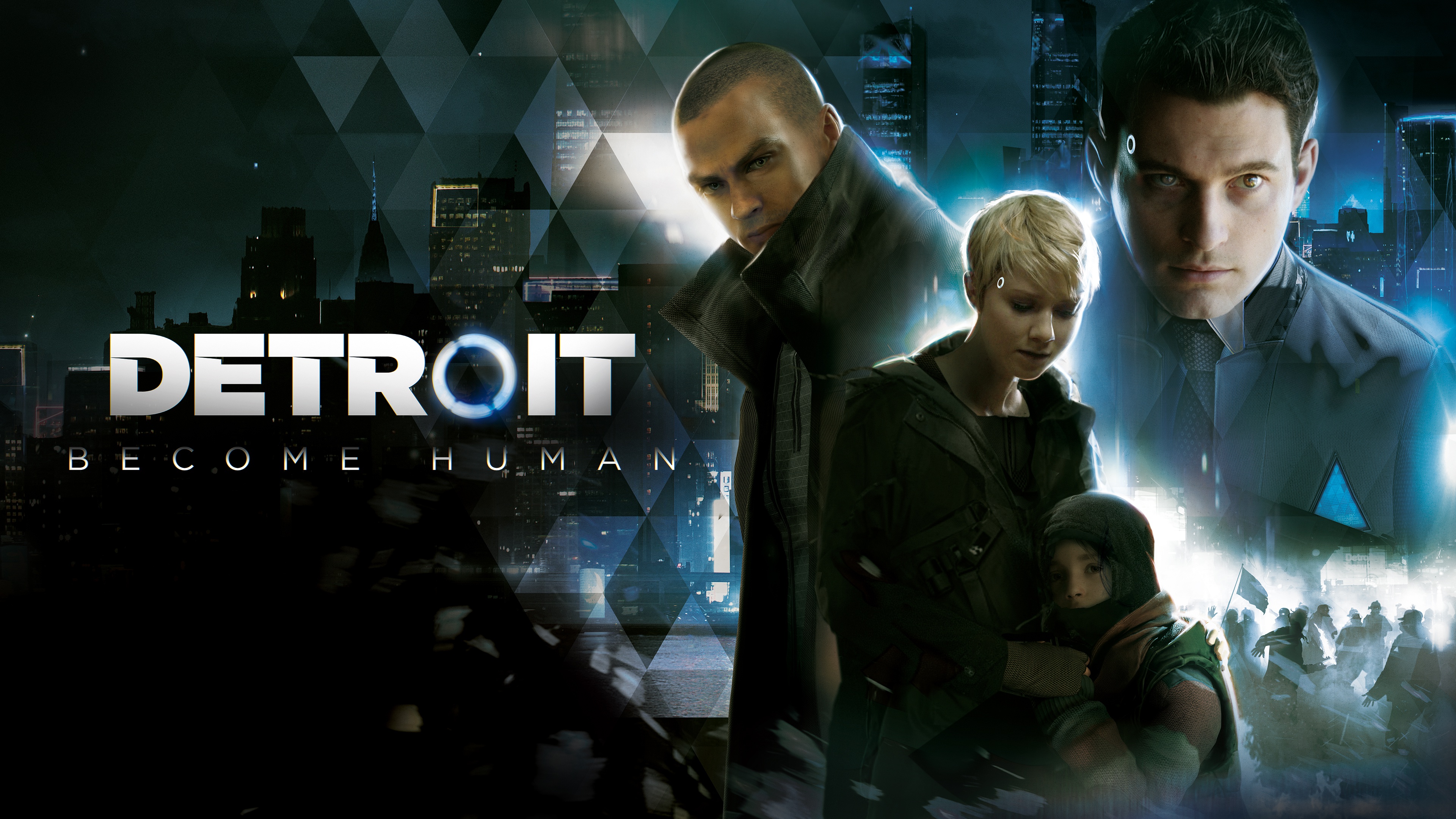
7. Detroit: Become Human
In terms of its gameplay, Detroit: Become Human is only slightly more difficult to complete than Bandersnatch, the interactive Black Mirror movie that came out on Netflix just before Christmas. No matter what the time of day, I’m always down to defend my argument that interactive fiction games are real and legitimate video games, and that to attempt to deny them such a classification is as absurd as arguing that watching televised sports isn’t ‘really watching TV’ because they don’t follow a script - it’s a medium, not a genre, and you can do a lot of wildly different things within a shared medium. That being said, the technical, controller-based business of Detroit: Become Human, while good at being engaging in the moment, isn’t particularly what makes the game innovative or memorable with hindsight. What does stand out in Detroit is its story and its cast - and, when the game at hand can be justly compared to a ten-hour movie (or “miniseries”, as I believe the kids are calling them these days), that’s a very good thing.

Unless you just really can’t stand anything written by David Cage, you’re probably of the opinion that Detroit: Become Human is the best game yet to come out of his studio Quantic Dream. Admittedly, the only real competition for that honour was 2010’s Heavy Rain (which, incidentally, I also played for the first time in 2018); which, despite being deservedly beloved, had a slew of issues, from its stilted acting to an admittedly nonsensical plot, in addition to just looking a bit dated at eight years old. Detroit: Become Human takes all of these criticisms on board (except, maybe, the accusations of sexism in Cage’s portrayal of women - though even that’s at least toned down significantly, thankfully) and demolishes them one by one.

By far and away the best thing about Detroit: Become Human are the performances put in by the cast. Bryan Dechart as Connor is deservedly being nominated for every video game acting award going, and I’m not just saying that because I’ve quite unashamedly adopted the character as my latest husbando. (If you think I ended Heavy Rain with a bit of an excessive crush on FBI Special Agent Norman Jayden, oh my, do I have news for you about how I feel about Connor). Aside from being deservedly lauded for portraying Connor’s (mostly wordless) internal struggle between obedience and deviance, Dechart’s comedic timing is something that I feel isn’t getting nearly the recognition it deserves. His politely smiling human-face equivalent of your computer’s “processing, please wait” pop-up every time Hank makes a sarcastic comment, or his brief pauses when reconciling illogical or contradictory instructions from his human colleagues, are Nimoy-esque in their understated humour in an inter-species comedy of manners. Other stand-out performances for me included Jesse Williams as Markus, Clancy Brown as Hank, and Gabrielle Hersh as Chloe, though in truth you’d be hard-pressed to find a bad actor even among the minor supporting cast. The contrast with Heavy Rain, where even the lead actors (bless their handsome FBI agent faces) couldn’t always maintain a believable accent, is pretty sharp.

If I have one complaint about Detroit: Become Human, it’s that there are so many minor choices in every scene that it becomes difficult to see your decisions as being meaningful overall. The level of nuance in some of the stories (for example, how far and under what circumstances you choose to have Connor deviate from his programming) sooner or later ends up being overruled by a stark binary choice so that the game can determine down which branch the plot needs to move. A similar objection was levelled against the end of the original Life is Strange, and while I feel Detroit: Become Human handles it better, it is still there.

Detroit: Become Human tackles a lot of fascinating questions about what it means to be human, both in relation to your essential sense of selfhood and in how you relate to those around you; and while it doesn’t handle its attempts to answer them perfectly, it does present a brilliant framework in which the player can explore their own feelings in more detail. If, like me, you’re a fan of TV shows like Westworld and Humans; games like SOMA; movies like Ex Machina; or the writing of authors such as Isaac Asimov and Brian Aldiss, you’ll find Detroit: Become Human a good-looking, polished, and worthy addition to the robot uprisings canon.

And now that we’ve got the serious analysis stuff out of the way, do you have a moment for me to tell you some more about how just utterly lovely Connor is…?